

Candlestick Charts: Meaning, Patterns, and Trading Strategies Explained
If you’ve ever opened a trading platform and seen red and green “candles” moving across a chart, you were looking at one of the most powerful tools in financial markets — the candlestick chart.
Candlestick charts are more than just colorful price bars. They reveal the psychology of buyers and sellers, show momentum shifts, highlight potential reversals, and help traders make informed decisions.
From beginners trading their first stock to professionals managing large portfolios, candlestick analysis remains a core part of technical trading.
In this complete guide, you’ll learn:
-
What candlestick charts really mean
-
How to read and interpret them correctly
-
The most important candlestick patterns
-
High-probability trading strategies
-
Risk management rules
-
Common mistakes to avoid
Let’s start from the foundation.
What Is a Candlestick Chart?
A candlestick chart is a visual representation of price movement over a specific time period. Each candlestick shows four key pieces of information:
-
Open price
-
Close price
-
High price
-
Low price
Unlike a simple line chart that only shows closing prices, candlestick charts display the entire price action within a time frame.
Candlestick charting originated in 18th-century Japan and was later introduced to Western markets. Today, it is used globally across stocks, forex, cryptocurrency, commodities, and indices.
Anatomy of a Candlestick
Every candlestick has two main parts:
1️⃣ The Body
The body represents the difference between the open and close price.
-
If the close is higher than the open → bullish candle (usually green)
-
If the close is lower than the open → bearish candle (usually red)
The size of the body shows the strength of buying or selling pressure.
2️⃣ The Wicks (Shadows)
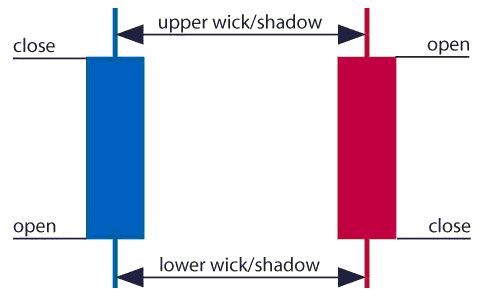
The thin lines above and below the body are called wicks or shadows.
-
Upper wick = highest price reached
-
Lower wick = lowest price reached
Long wicks show rejection of price levels.
For example:
-
Long lower wick → buyers stepped in strongly
-
Long upper wick → sellers pushed price down
Understanding this is key to reading market psychology.
Why Candlestick Charts Are So Powerful
Candlestick charts show emotion.
Markets move because of fear and greed. Every candle represents a battle between buyers and sellers.
Instead of just seeing numbers, you see:
-
Momentum
-
Rejection
-
Indecision
-
Exhaustion
-
Breakouts
That’s why professional traders still rely heavily on candlestick analysis.
Types of Candlestick Patterns
Candlestick patterns fall into three categories:
-
Reversal patterns
-
Continuation patterns
-
Indecision patterns
Let’s break them down.
Bullish Reversal Patterns
These patterns appear after a downtrend and suggest price may move upward.
Hammer Pattern
The hammer has:
-
Small body near the top
-
Long lower wick
-
Little or no upper wick
It shows sellers pushed price lower, but buyers regained control before the close.
Best used near strong support zones.
Bullish Engulfing Pattern

This is a two-candle formation:
-
First candle: small bearish
-
Second candle: large bullish that fully engulfs the previous body
It signals strong buying pressure.
The bigger the engulfing candle, the stronger the signal.
Morning Star Pattern

A three-candle formation:
-
Strong bearish candle
-
Small indecision candle
-
Strong bullish candle closing above midpoint of first candle
This pattern often marks trend reversal.
Bearish Reversal Patterns
These appear after an uptrend and suggest downside movement.
Shooting Star Pattern
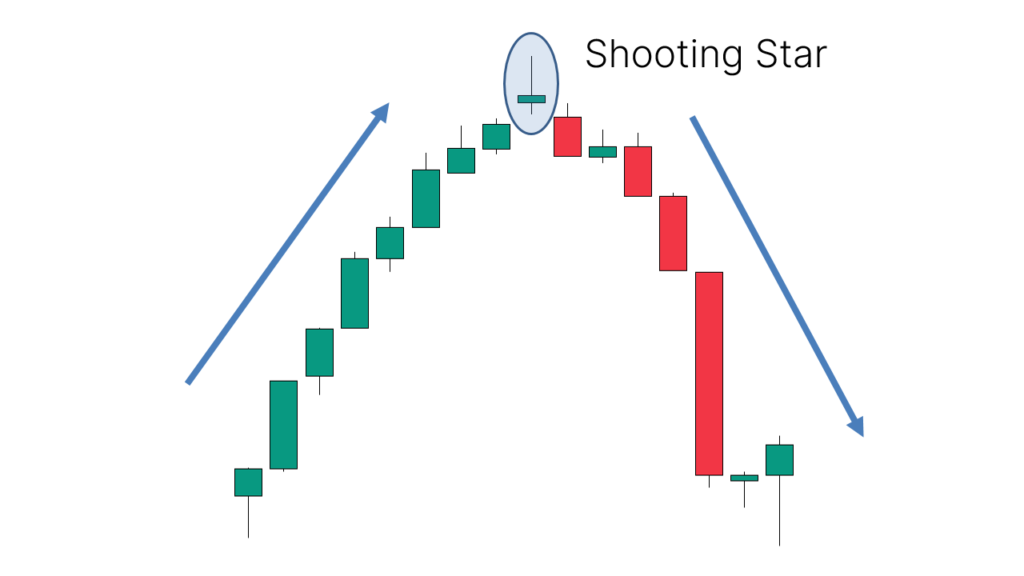
The shooting star has:
-
Small body near bottom
-
Long upper wick
It shows buyers attempted to push price higher, but sellers rejected those highs.
Works best near resistance levels.
Bearish Engulfing Pattern

Two-candle pattern:
-
Small bullish candle
-
Large bearish candle engulfing the previous body
It signals selling strength.
Evening Star Pattern

Opposite of Morning Star:
-
Strong bullish candle
-
Small indecision candle
-
Strong bearish candle
Often signals trend exhaustion.
Indecision Patterns
These show balance between buyers and sellers.
Doji Pattern

The Doji forms when open and close are nearly equal.
It signals uncertainty.
Types include:
-
Standard Doji
-
Dragonfly Doji
-
Gravestone Doji
-
Long-Legged Doji
Doji requires confirmation from the next candle.
Continuation Patterns
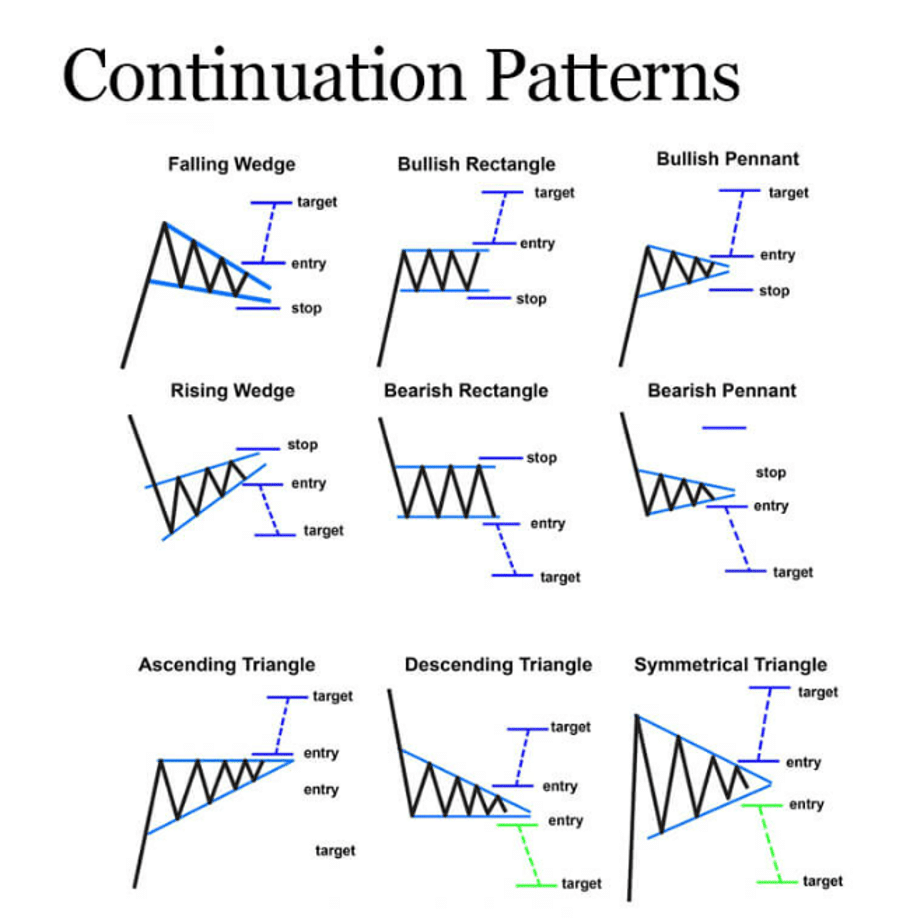
These indicate trend continuation rather than reversal.
Rising Three Methods
-
Strong bullish candle
-
Three small bearish candles inside its range
-
Another strong bullish candle
Shows temporary pullback before trend resumes.
Falling Three Methods

Opposite of Rising Three.
Indicates continuation of downtrend.
How to Trade Using Candlestick Patterns
Patterns alone are not enough.
Combine them with:
-
Support and resistance
-
Moving averages
-
Volume analysis
-
Trend direction
Here are practical strategies.
Strategy 1: Support + Hammer Entry
-
Identify strong support
-
Wait for hammer
-
Enter above hammer high
-
Place stop below hammer low
This confirms rejection of lower prices.
Strategy 2: Resistance + Bearish Engulfing
-
Identify resistance zone
-
Wait for bearish engulfing
-
Enter on confirmation
-
Stop above recent high
This captures reversal setups.
Strategy 3: Trend Pullback Strategy
-
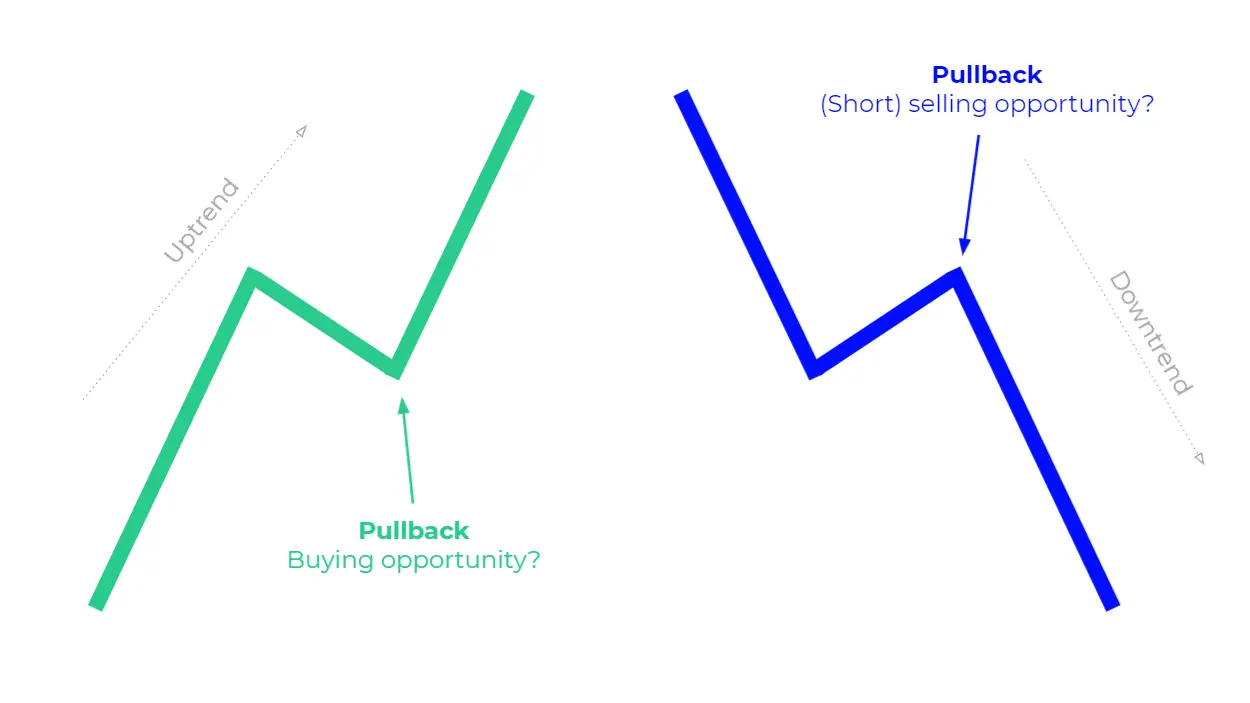
Identify strong uptrend
-
Wait for pullback to moving average
-
Look for bullish pattern
-
Enter with trend
Trend + pattern increases probability.
Timeframes and Reliability

Higher timeframes produce stronger signals.
-
1-minute = high noise
-
5-minute = intraday
-
Daily = swing trading
-
Weekly = long-term
Professional traders focus more on daily and weekly charts.
Risk Management Rules
No pattern is 100% accurate.
Follow strict discipline:
-
Risk only 1–2% per trade
-
Use stop-loss every time
-
Avoid emotional trading
-
Keep reward-to-risk ratio at least 2:1
Risk management determines survival.
Common Mistakes Beginners Make

-
Trading every pattern blindly
-
Ignoring overall trend
-
Not waiting for confirmation
-
Overleveraging
-
Revenge trading
Patience separates profitable traders from emotional ones.
Candlestick Charts in Different Markets

Candlestick analysis works across:
-
Stock markets
-
Forex
-
Cryptocurrency
-
Commodities
-
Indices
Because price action psychology remains constant.
Advanced Concepts in Candlestick Trading
For intermediate traders, you can combine:
-
Volume profile
-
RSI divergence
-
MACD confirmation
-
Multi-timeframe analysis
The more confluence you have, the stronger the trade setup.
Final Thoughts
Candlestick charts are not magic.
They are probability tools based on market psychology.
When combined with:
-
Strong support and resistance
-
Trend analysis
-
Volume confirmation
-
Risk management
They become one of the most powerful tools in trading.
Mastering candlestick charts requires practice, chart time, and discipline. But once you understand what each candle represents — you stop guessing and start interpreting.
And that’s when trading becomes structured instead of emotional.