

Sensex Falls Today — A Sharp Reminder of Market Volatility
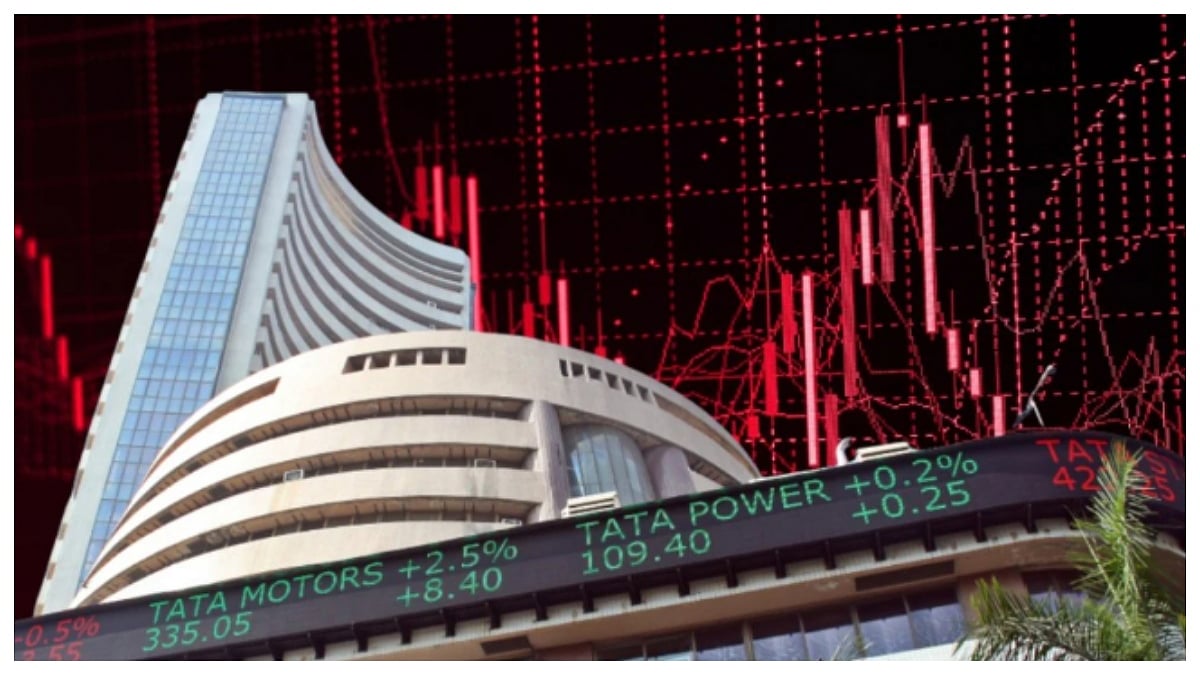
India’s stock market witnessed a noticeable decline today, with the BSE Sensex slipping under pressure and dragging overall sentiment lower.
Alongside it, the Nifty 50 also traded in negative territory, reflecting a broader sell-off across sectors.
For retail investors and market watchers, the sudden drop raises an important question:
👉 What exactly caused the market to fall today?
The answer lies in a mix of global uncertainty, institutional selling, sector-specific weakness, and natural market correction dynamics.
Market Overview: What Happened During Today’s Session?
Today’s trading session began on a weak note and remained under pressure throughout the day.
Key observations:
- Benchmark indices opened lower and failed to recover significantly
- Selling pressure was visible across large-cap, mid-cap, and small-cap stocks
- Market breadth remained negative, indicating widespread decline
- Volatility increased as the session progressed
This was not a narrow decline driven by a few stocks — it was a broad-based market correction.
Global Market Weakness Sets the Tone
One of the primary triggers behind today’s fall is weak global sentiment.
Stock markets across the world have been reacting to multiple uncertainties, including:
- Geopolitical tensions in key regions
- Concerns over slowing global economic growth
- Uncertainty surrounding major economies such as the United States and China
When global markets show signs of instability, investors tend to reduce exposure to riskier assets — including equities in emerging markets like India.
As a result, indices like the BSE Sensex often react negatively to global cues.
Foreign Institutional Investors Turn Sellers

Another major factor behind today’s decline is selling by Foreign Institutional Investors (FIIs).
FIIs play a crucial role in determining short-term market direction due to the large volumes they trade.
Recent trends indicate:
- Increased selling activity by FIIs
- Reduced inflows into Indian equities
- A shift toward safer assets amid global uncertainty
When FIIs pull money out, it leads to:
- Reduced liquidity in the market
- Downward pressure on stock prices
- Increased volatility
This has been one of the key contributors to today’s fall.
Banking Sector Drags the Market Lower
The banking sector, which holds significant weight in benchmark indices, was among the biggest losers today.
Major banking stocks experienced:
- Profit booking after recent gains
- Selling pressure due to cautious sentiment
- Weak intraday momentum
Because banking stocks have a high representation in the BSE Sensex, their decline had a direct and amplified impact on the index.
The weakness in this sector alone was enough to keep the market under pressure.
IT Stocks Reflect Global Concerns
The IT sector also contributed to the market’s decline.
Indian IT companies are heavily dependent on global clients, particularly from the United States and Europe. Any sign of slowdown in these economies tends to affect IT stock performance.
Today’s pressure on IT stocks was driven by:
- Concerns over reduced global tech spending
- Weak cues from international markets
- Currency-related uncertainties
As a result, IT stocks remained under pressure throughout the session.
Profit Booking After Recent Rally
It is important to understand that not all market falls are driven by negative news.
Sometimes, declines are simply the result of profit booking.
After a period of sustained gains, investors often:
- Sell stocks to lock in profits
- Reduce risk exposure
- Wait for better entry levels
This natural cycle of buying and selling is essential for market health.
Today’s fall partly reflects this behavior, as investors chose to secure gains following recent upward movements.
Interest Rate and Inflation Concerns
Another factor influencing investor sentiment is the outlook on interest rates.
Globally, central banks continue to monitor inflation closely. Any indication of:
- Rising inflation
- Potential rate hikes
- Tightening monetary policy
can impact stock markets negatively.
Higher interest rates tend to:
- Reduce liquidity in the system
- Increase borrowing costs
- Lower valuations of equities
These concerns are adding to the cautious sentiment in the market.
Mid-Cap and Small-Cap Stocks Face Sharper Selling
While large-cap stocks declined, the impact was even more pronounced in mid-cap and small-cap segments.
These stocks are generally more volatile and sensitive to market sentiment.
Today’s trends showed:
- Sharp declines in mid-cap indices
- Increased selling in small-cap stocks
- Higher volatility compared to large caps
This suggests that investors are becoming more cautious and moving toward safer investments.
Investor Psychology: Fear vs Opportunity
Market movements are not just driven by data — they are also influenced by investor psychology.
During market declines:
- Fear tends to increase
- Panic selling can occur
- Short-term decisions dominate
However, experienced investors often take a different approach.
They view corrections as:
- Opportunities to accumulate quality stocks
- A chance to rebalance portfolios
- A normal part of market cycles
Understanding this difference is crucial for long-term success in investing.
What Should Investors Do Now?
The most important question for investors is: What next?
Here are some practical strategies to consider:
Stay Calm and Avoid Panic Selling
Short-term volatility is normal. Emotional decisions often lead to losses.
Focus on Fundamentals
Invest in companies with strong financials, stable growth, and solid business models.
Use SIPs to Your Advantage
Systematic Investment Plans help average out costs and reduce the impact of volatility.
Diversify Your Portfolio
Avoid overexposure to a single sector or asset class.
What Lies Ahead for the Market?
The near-term outlook for the market remains uncertain.
Key factors to watch include:
- Global market trends
- FII buying or selling activity
- Corporate earnings reports
- Inflation and interest rate signals
If global conditions stabilize, markets may recover.
However, continued uncertainty could lead to further volatility.
The Bigger Picture: Long-Term Growth Story Remains Intact
Despite short-term fluctuations, India’s long-term growth story remains strong.
Factors supporting this include:
- Strong economic fundamentals
- Growing domestic consumption
- Expanding digital and financial ecosystem
- Government infrastructure spending
These factors continue to make India an attractive destination for long-term investors.
Final Thoughts
Today’s fall in the BSE Sensex serves as a reminder that markets are inherently volatile.
While short-term declines can be unsettling, they are a natural part of the investment journey.
For investors, the key is not to react impulsively but to stay informed, disciplined, and focused on long-term goals.
Because in the world of investing, it’s not about avoiding falls —
it’s about knowing how to respond when they happen.