

Global Markets Shaken: Why Asia Stocks Fell After Hitting All-Time Highs.

Asian equity markets paused their recent rally on April 23, 2026, as rising geopolitical tensions surrounding Iran unsettled investor sentiment and triggered profit booking across major indices. After weeks of strong upward momentum that pushed benchmark indices in Japan and South Korea to record or near-record levels, the shift in tone highlights how fragile market confidence can be when geopolitical risks resurface.
The decline was led by Japan’s Nikkei 225 and South Korea’s KOSPI, both of which retreated after touching historic highs earlier in the week. While the pullback may appear modest compared to the scale of the recent rally, the underlying drivers point to a broader recalibration of risk across global markets.
At the heart of the sell-off lies a familiar yet powerful factor: uncertainty in the Middle East, particularly involving Iran and critical global energy routes.
Markets Lose Momentum After Record-Breaking Run
The recent weakness in Asian markets comes after a sustained period of gains driven by optimism around global growth, resilient corporate earnings, and strong demand for technology stocks. Japan’s Nikkei had surged past the psychologically significant 60,000 level, marking a historic milestone fueled by foreign inflows and a weaker yen that boosted export-oriented companies.
Similarly, South Korea’s KOSPI had climbed to record highs, supported by a recovery in the semiconductor cycle and robust performance from major chipmakers. The rally in both markets reflected a broader global trend, where investors poured capital into equities amid expectations that central banks would soon begin easing monetary policy.
However, markets rarely move in a straight line. The rapid ascent left valuations stretched in certain sectors, making equities vulnerable to external shocks. The resurgence of geopolitical tensions provided exactly the kind of trigger needed for investors to reassess their positions.
Iran Tensions Resurface as Key Market Risk

Geopolitical concerns intensified following reports of increased activity involving Iran in strategic waterways, particularly the Strait of Hormuz. This narrow passage, which connects the Persian Gulf to global markets, is one of the most critical oil transit routes in the world. A significant portion of global crude oil supply passes through this corridor, making it highly sensitive to political and military developments.
Any disruption—or even the perception of potential disruption—in this region has immediate consequences for energy markets. Investors are acutely aware that instability in the Strait of Hormuz can lead to supply constraints, triggering sharp increases in oil prices.
The current situation does not necessarily indicate a full-scale conflict, but rather a state of heightened uncertainty. Markets often react not just to actual events, but to the probability of escalation. In this case, the risk premium associated with Middle East tensions has risen, prompting a shift in investor behavior.
Oil Prices Rise, Complicating Inflation Outlook
One of the most immediate effects of rising geopolitical tension is an increase in oil prices. As concerns about supply disruptions grow, traders tend to bid up crude prices, anticipating tighter availability in global markets.
Higher oil prices have far-reaching implications. They directly impact transportation and manufacturing costs, which in turn feed into broader inflation metrics. For economies that are already grappling with elevated inflation levels, a surge in energy prices complicates the path forward for policymakers.
Central banks, particularly in major economies such as the United States, have been closely monitoring inflation trends. Recent market optimism was partly based on expectations that inflation would continue to moderate, allowing central banks to cut interest rates in the near future.
However, a sustained increase in oil prices could delay this process. If inflation remains sticky or begins to rise again, policymakers may choose to keep interest rates higher for longer. This scenario is generally unfavorable for equity markets, as higher borrowing costs tend to weigh on corporate profitability and investor valuations.
Profit Booking Adds to Market Pressure
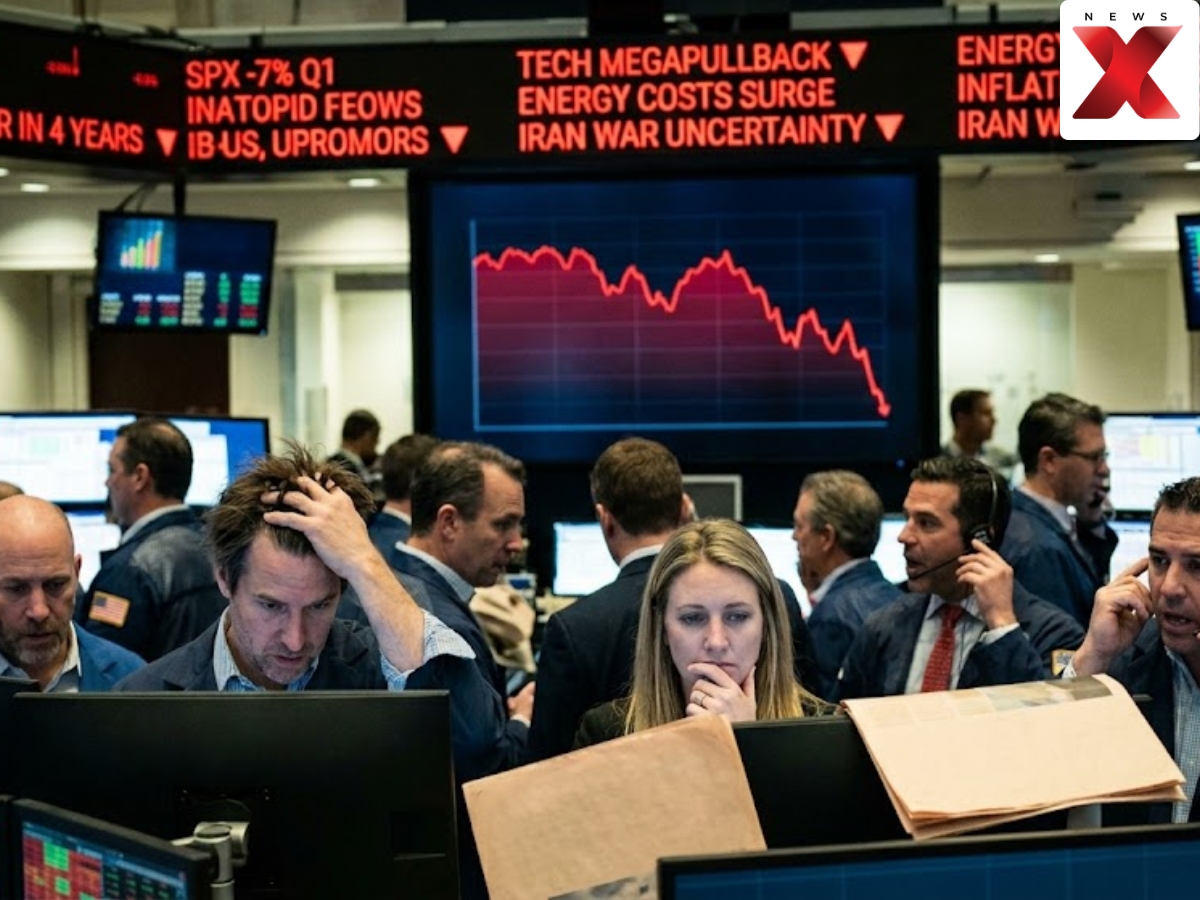
In addition to geopolitical concerns, the decline in Asian markets was also driven by profit-taking. After a strong rally, it is common for investors to lock in gains, especially when uncertainty begins to rise.
The Nikkei’s rapid climb above 60,000 created an environment where valuations in certain sectors appeared stretched. Similarly, the KOSPI’s rally, driven largely by semiconductor stocks, left little margin for negative surprises.
When markets are priced for perfection, even a slight shift in sentiment can trigger a pullback. In this case, the combination of geopolitical risk and elevated valuations provided sufficient reason for investors to reduce exposure.
Importantly, the selling pressure was not indicative of panic. Instead, it reflected a cautious approach, with investors adjusting their portfolios in response to changing conditions.
Technology and Semiconductor Stocks Face Pressure
Technology stocks, which have been the primary drivers of the recent rally, were among the hardest hit during the decline. Companies linked to artificial intelligence, semiconductors, and advanced manufacturing had seen significant gains in recent months, making them particularly sensitive to shifts in risk sentiment.
In South Korea, semiconductor giants experienced a slowdown in momentum as investors reassessed growth expectations. The global chip cycle remains positive, but short-term uncertainties can still influence stock performance.
Similarly, Japanese technology and export-oriented companies faced pressure as the yen showed signs of stabilization and global demand outlook became less certain.
The pullback in these sectors underscores a broader trend: high-growth stocks tend to be more volatile during periods of uncertainty. While they offer significant upside potential, they are also more susceptible to corrections when sentiment weakens.
Global Ripple Effects
The impact of the decline was not limited to Asia. Global markets reacted swiftly, with U.S. futures and European indices also showing signs of weakness. This highlights the interconnected nature of modern financial systems, where developments in one region can quickly influence markets worldwide.
Investors across the globe are closely monitoring the situation in the Middle East, recognizing its potential to affect energy prices, inflation, and economic growth. The current environment serves as a reminder that geopolitical risks remain a key factor in market dynamics, even in an era dominated by technological innovation and economic data.
Shift Toward Safe-Haven Assets
As equity markets weakened, there was a noticeable shift toward safe-haven assets. Gold prices edged higher, reflecting increased demand for stability during uncertain times. The U.S. dollar also strengthened, benefiting from its status as a global reserve currency.
These movements are consistent with typical market behavior during periods of heightened risk. Investors tend to reduce exposure to volatile assets and allocate capital to instruments perceived as safer.
While the shift was not extreme, it indicates a change in sentiment that could persist if geopolitical tensions continue to escalate.
What Comes Next for Markets?
The trajectory of Asian and global markets will largely depend on how the situation involving Iran evolves in the coming days and weeks. Several scenarios are possible:
If tensions ease, markets could quickly recover, resuming their upward trend driven by strong fundamentals and expectations of monetary easing.
If tensions escalate, the impact could be more severe, with oil prices rising further and equity markets experiencing deeper corrections.
A prolonged period of uncertainty could lead to increased volatility, with markets moving sideways as investors wait for clearer signals.
At present, the most likely outcome appears to be a period of consolidation, where markets digest recent gains while adjusting to new risks.
Investor Strategy in a Volatile Environment
For investors, the current situation highlights the importance of maintaining a balanced and disciplined approach.
Panic selling is rarely a productive strategy, particularly in response to short-term events. At the same time, chasing rallies without considering underlying risks can lead to unfavorable outcomes.
A more measured approach involves:
- Monitoring key indicators such as oil prices and geopolitical developments
- Maintaining diversification across sectors and asset classes
- Taking a medium- to long-term perspective rather than reacting to daily fluctuations
Periods of volatility often create opportunities for disciplined investors. Market corrections can provide attractive entry points for high-quality assets, provided that the broader economic outlook remains intact.
The Bigger Picture
The recent decline in Asian markets serves as a reminder of how interconnected and sensitive global financial systems have become. Economic fundamentals, corporate performance, and technological innovation all play important roles in shaping market trends. However, geopolitical factors can override these elements in the short term, introducing sudden and sometimes unpredictable shifts.
In 2026, markets are navigating a complex landscape that includes evolving monetary policies, technological disruption, and geopolitical uncertainty. The ability to adapt to these conditions will be crucial for both investors and policymakers.
Conclusion
The pullback in Asian stocks, led by declines in the Nikkei and KOSPI, reflects a combination of profit-taking and renewed geopolitical concerns centered around Iran. While the drop may not signal the beginning of a broader downturn, it highlights the importance of vigilance in an environment where external risks can quickly influence market dynamics.
For now, the situation remains fluid. Investors will continue to watch developments in the Middle East, movements in oil prices, and signals from central banks. These factors will play a critical role in determining whether markets regain their upward momentum or enter a more prolonged phase of volatility.
In the meantime, the recent decline can be seen not as a cause for alarm, but as a natural pause in an otherwise strong market cycle—one that underscores the delicate balance between optimism and caution in global investing.